From, of course, Toronto: Kipling's "Recessional," written for the Diamond Jubilee, and before the Boer War.
Toronto's selection of poems from Thomas Hardy.
The Boer War: Magersfontein, and soldiers in the field at Rosmead (Daskoppies).
From the Victorian Web, a reliable text (you'd be surprised how many bad ones are out there) of Hardy's "Drummer Hodge."
From Toronto, Hardy's "The Convergence of the Twain." The subject of that poem, in port and under way. The other subject of the "consummation" in Hardy's poem. Not the subject of Hardy's poem.
Many, many more images and photographs relevant to the life and works of Thomas Hardy.
The current American poet Philip Levine praises "During Wind and Rain"; scroll down a bit for an accurate version of the poem.
The Great War starts.
The Toronto selection from Edward Thomas. An articulate if limited resource center for Thomas and the other Dymock Poets.
From Toronto, Owen's "Dulce et Decorum Est."
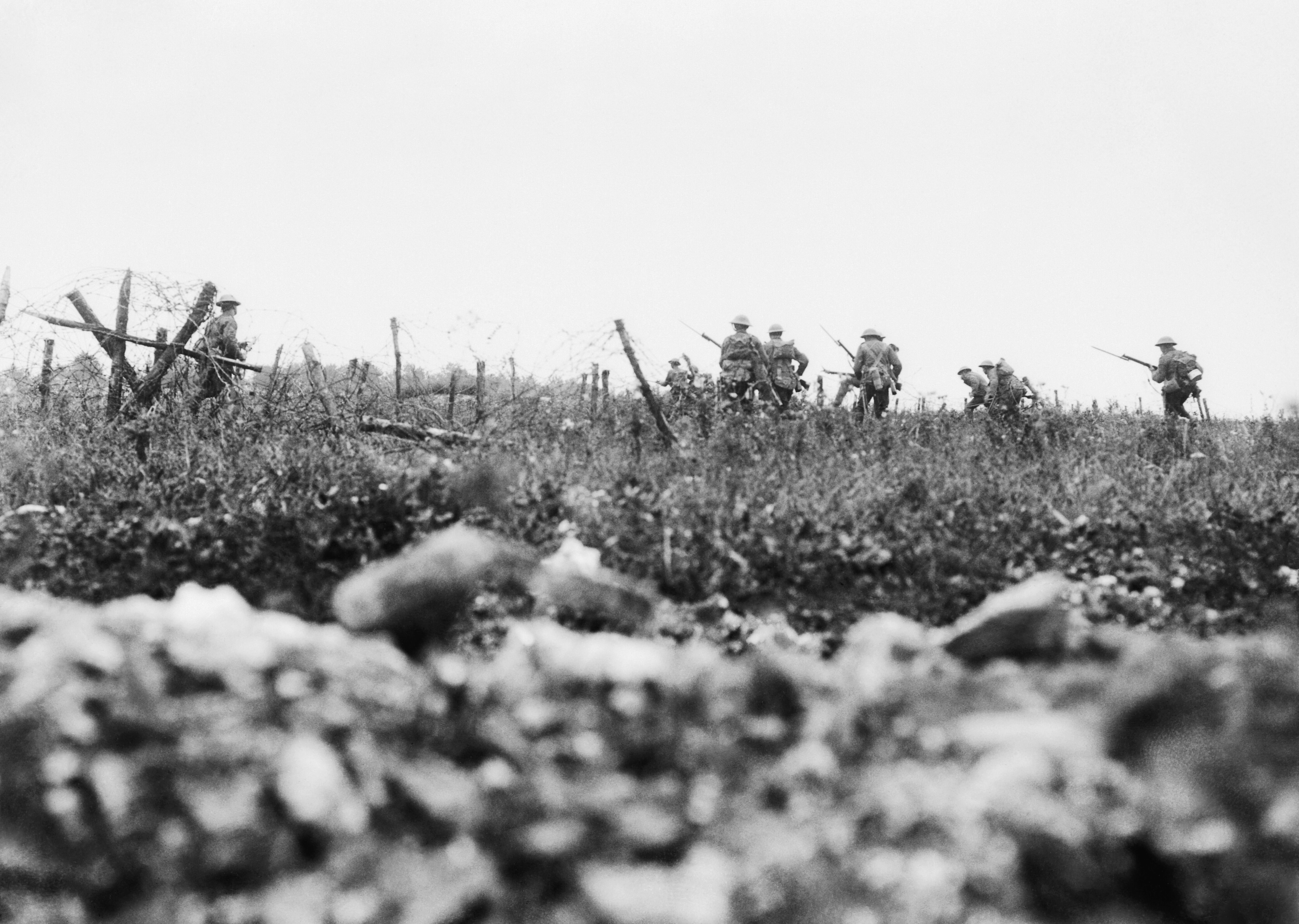
A First World War internet archive, and a related archive devoted to poetry. Another multimedia First World War archive. From that archive, a primer on poison gas.
Soldiers putting on gas masks.Soldiers digging a trench.
The considerable English critic, scholar and poet Tim Kendall has a war poetry blog, with its own useful links
Sunday, April 5, 2009




Tuesday, March 31, 2009
earnest
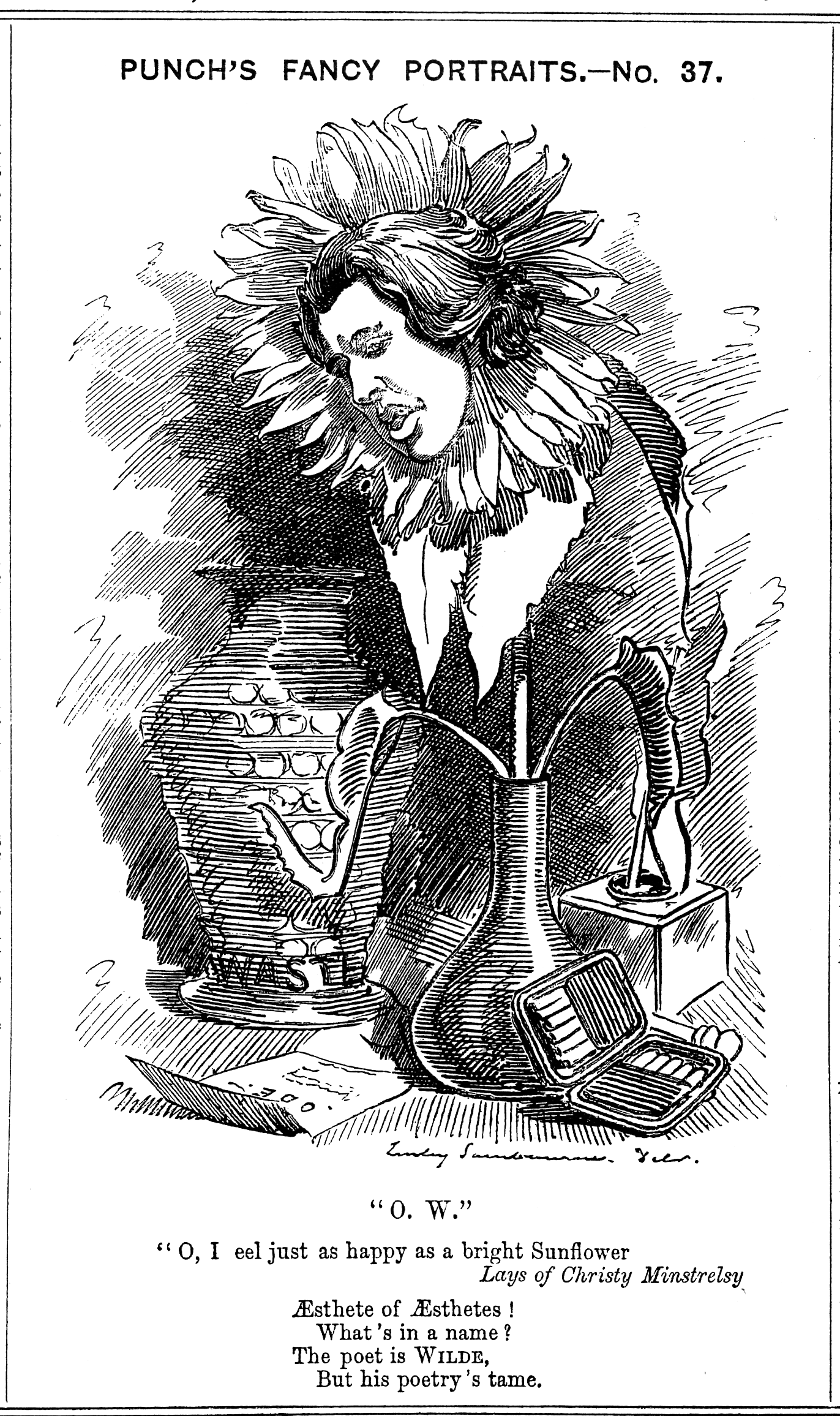
Oscar Wilde, photogenic aesthete, and an 1881 parody of his early public image. Max Beerbohm's caricature of Wilde on his successful American tour.
The full text of Wilde's essay in dialogue form, "The Decay of Lying."
More full text of Wilde's works online, inelegantly, from the Victorian Web, and very elegantly at a nonacademic site.
One of Beardsley's famous illustrations for Wilde's Salome (English tr. by Douglas pub. 1894); another one of Beardsley's illustrations, and another.
More Beardsley and Decadence: A Suggested Reform for... Ballet" (1895); another title page; a collection of Beardsley's art for the Yellow Book, which contrary to reputation never published Wilde.
Wilde's image and identity sell things.
Some of the most important things in life.
Stills from a few recent productions of Earnest: Seattle's Village Theatre (what is Lady Bracknell wearing?). Algernon and Jack, from the Village Theatre again.
At the American Repertory Theater, in the Ridiculusmus Company's all-male production.
At Gonzaga University: one of many recent student productions.

The full text of Wilde's essay in dialogue form, "The Decay of Lying."
More full text of Wilde's works online, inelegantly, from the Victorian Web, and very elegantly at a nonacademic site.
One of Beardsley's famous illustrations for Wilde's Salome (English tr. by Douglas pub. 1894); another one of Beardsley's illustrations, and another.


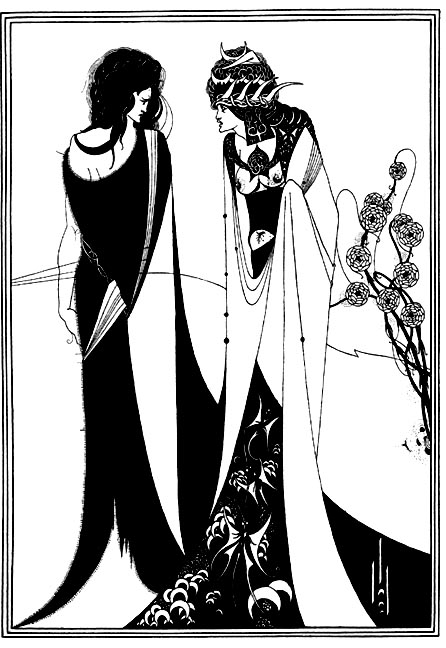
More Beardsley and Decadence: A Suggested Reform for... Ballet" (1895); another title page; a collection of Beardsley's art for the Yellow Book, which contrary to reputation never published Wilde.


Wilde's image and identity sell things.
Some of the most important things in life.

Stills from a few recent productions of Earnest: Seattle's Village Theatre (what is Lady Bracknell wearing?). Algernon and Jack, from the Village Theatre again.


At the American Repertory Theater, in the Ridiculusmus Company's all-male production.

At Gonzaga University: one of many recent student productions.

Friday, March 20, 2009
Victorians (3)
More Pre-Raphaelites: Holman Hunt's "The Hireling Shepherd" (1851) and J. W. Waterhouse's Lady of Shalott (1888) and another image of Waterhouse's Lady (illustrating Tennyson's poem).
Journalism: a header from an 1844 Illustrated London News, and a front page.
Your excerpt from Pater's Renaissance has, as visual example, only the Mona Lisa (La Gioconda); Pater's book also devotes chapters to Giorgione, Michelangelo (as poet), Della Robbia, and Botticelli. Here's Giorgone's Tempest (1508), Luca Della Robbia's Christ Ascending, and Botticelli's Madonna of the Pomegranate (1490s).
From Toronto again, Walter Pater on Coleridge, and on Wordsworth, and on style: "Such is the matter of imaginative or artistic literature -- this transcript, not of mere fact, but of fact in its infinite variety, as modified by human preference in all its infinitely varied forms."
The Victorian Web people go to work on Hopkins and on Pater.
Hopkins at Toronto: "The Wreck of the Deutschland." "The Windhover." Also "As kingfishers..." and two of the so-called "terrible sonnets," "No worst, there is none" and "Thou art indeed just, Lord."
Hopkins's source for "Thou art indeed just": Jeremiah 12, in the King James version, and (if you read Latin) in a nonacademic online edition of the Vulgate, what Hopkins himself would have read and reread.
Some pages from Hopkins' journals (note the interpenetration of words and sketches).
A British kingfisher. Another British kingfisher: see how the feathers across the bird's back "catch fire."
A windhover, or British kestrel, in characteristic "hovering" form.
A British bird blogger discovers a kestrel in flight (scroll down for more photos).


Journalism: a header from an 1844 Illustrated London News, and a front page.


Your excerpt from Pater's Renaissance has, as visual example, only the Mona Lisa (La Gioconda); Pater's book also devotes chapters to Giorgione, Michelangelo (as poet), Della Robbia, and Botticelli. Here's Giorgone's Tempest (1508), Luca Della Robbia's Christ Ascending, and Botticelli's Madonna of the Pomegranate (1490s).


From Toronto again, Walter Pater on Coleridge, and on Wordsworth, and on style: "Such is the matter of imaginative or artistic literature -- this transcript, not of mere fact, but of fact in its infinite variety, as modified by human preference in all its infinitely varied forms."
The Victorian Web people go to work on Hopkins and on Pater.
Hopkins at Toronto: "The Wreck of the Deutschland." "The Windhover." Also "As kingfishers..." and two of the so-called "terrible sonnets," "No worst, there is none" and "Thou art indeed just, Lord."
Hopkins's source for "Thou art indeed just": Jeremiah 12, in the King James version, and (if you read Latin) in a nonacademic online edition of the Vulgate, what Hopkins himself would have read and reread.
Some pages from Hopkins' journals (note the interpenetration of words and sketches).
A British kingfisher. Another British kingfisher: see how the feathers across the bird's back "catch fire."


A windhover, or British kestrel, in characteristic "hovering" form.

A British bird blogger discovers a kestrel in flight (scroll down for more photos).
Tuesday, March 17, 2009
Victorians (2)
Christina Rossetti's "Up-Hill." George Herbert's "Love (III)" and Herbert's other poems at Toronto's site.
Christina Rossetti's set of poems at Toronto's site.
D. G. Rossetti, "Dante's Dream" (1856) at the Tate. D.G.Rossetti, "Dantis Amor" ("Dante's Vision of Love," 1860), a panel. DGR's "Blessed Damozel" (1875-78), at the Fogg.
One of DGR's engraved illustrations for "Goblin Market" (1862). Another of his illustrations.
Victorian Web's Christina Rossetti page.
Christina Rossetti and her mother.
Swinburne's "Hymn to Proserpine." More Swinburne from Toronto.
A fully searchable online Swinburne from Indiana University.
Dante Gabriel Rossetti's painting "Proserpine" (1874) at the Tate.
From the National University of Taiwan, a big page with many images (and study questions and such) all about Pre-Raphaelite women: consider alongside Christina's "In an Artist's Studio."
Christina Rossetti's set of poems at Toronto's site.
D. G. Rossetti, "Dante's Dream" (1856) at the Tate. D.G.Rossetti, "Dantis Amor" ("Dante's Vision of Love," 1860), a panel. DGR's "Blessed Damozel" (1875-78), at the Fogg.

One of DGR's engraved illustrations for "Goblin Market" (1862). Another of his illustrations.


Victorian Web's Christina Rossetti page.
Christina Rossetti and her mother.

Swinburne's "Hymn to Proserpine." More Swinburne from Toronto.
A fully searchable online Swinburne from Indiana University.
Dante Gabriel Rossetti's painting "Proserpine" (1874) at the Tate.
From the National University of Taiwan, a big page with many images (and study questions and such) all about Pre-Raphaelite women: consider alongside Christina's "In an Artist's Studio."
Sunday, March 15, 2009
Robert Browning
From Toronto, poems by Robert Browning, among them "Andrea del Sarto" and "Fra Lippo Lippi."
Paintings by Fra Lippo Lippi (Fillipo or Fillipino Lippi) via ArtStor (Harvard login required).
Paintings by Fra Lippi from Aiwaz, a public Internet art source.
Giotto's Presentation of the Virgin (1305); Giotto's Deposition;Fra Angelico's Annunciation (1430?).
Fra Lippi's Jerome. Another, later Jerome (part of an altarpiece). Fra Lippi's Madonna and Child (1445; in Florence, where Robert Browning would likely have seen it). Fra Lippo's Coronation (described in the poem).
The Victorian Web collective annotates "Fra Lippo Lippi."
Paintings by Andrea del Sarto (Andrea d'Agnolo) via ArtStor (Harvard login required).
The central figure from Andrea's Madonna of the Harpies (1517). The Madonna of the Harpies seen entire.
Another Madonna by Andrea; a Virgin and Child (1509-10); Andrea's Holy Family. An Annunciation (1528).
A class at Stone Hill College annotates, with some images, Browning's "Andrea del Sarto."
Paintings by Fra Lippo Lippi (Fillipo or Fillipino Lippi) via ArtStor (Harvard login required).
Paintings by Fra Lippi from Aiwaz, a public Internet art source.
Giotto's Presentation of the Virgin (1305); Giotto's Deposition;Fra Angelico's Annunciation (1430?).


Fra Lippi's Jerome. Another, later Jerome (part of an altarpiece). Fra Lippi's Madonna and Child (1445; in Florence, where Robert Browning would likely have seen it). Fra Lippo's Coronation (described in the poem).

The Victorian Web collective annotates "Fra Lippo Lippi."
Paintings by Andrea del Sarto (Andrea d'Agnolo) via ArtStor (Harvard login required).
The central figure from Andrea's Madonna of the Harpies (1517). The Madonna of the Harpies seen entire.


Another Madonna by Andrea; a Virgin and Child (1509-10); Andrea's Holy Family. An Annunciation (1528).


A class at Stone Hill College annotates, with some images, Browning's "Andrea del Sarto."
Sunday, March 8, 2009
Victorians (1)
Lots of Tennyson at the Toronto site, including "Locksley Hall," the sequel to "Locksley Hall" (in the same remarkable meter), "Ulysses," and "Tithonus."
Also from Toronto: the entirety of In Memoriam.
From Britain's National Portrait Gallery, F. L. Chantrey's sketch of A. H. Hallam.
From the collections of the Victoria and Albert Museum-- a great place to look for almost anything about the applied and decorative arts in Britain, in any period-- Victorian mourning fabric and half-mourning fabric.
From Victorian Web: the Tennyson home page, and the Arnold page, and the E. B. Browning page, and the recently revised Emily Brontë page.
One of many photographs of Tennyson.
Emily Brontë's "No coward soul" in the Toronto version (with punctuation made regular, as she might have done had she prepared it for printing; Norton gives exactly what she wrote).
Arnold's "To Marguerite, Continued," and its less than subtle prequel (note the last lines). Arnold's Dover Beach.
Looking at Dover: the famous cliffs; the tumultuous sea and shore.
Elizabeth Barrett Browning's Sonnets from the Portuguese, in electronic full text (requires Harvard login).
One of the versions of Fitzgerald's Rubaiyyat in a complete (if unattractive) online text from Cornell.
A fun, multilingual, and informative, though very much nonacademic, Omar Khayyam fan site, with comparisons between the Persian (in Persian script) of Omar, literal translations into English and other European languages, and FitzGerald's adaptations.
Also from Toronto: the entirety of In Memoriam.
From Britain's National Portrait Gallery, F. L. Chantrey's sketch of A. H. Hallam.
From the collections of the Victoria and Albert Museum-- a great place to look for almost anything about the applied and decorative arts in Britain, in any period-- Victorian mourning fabric and half-mourning fabric.
From Victorian Web: the Tennyson home page, and the Arnold page, and the E. B. Browning page, and the recently revised Emily Brontë page.
One of many photographs of Tennyson.

Emily Brontë's "No coward soul" in the Toronto version (with punctuation made regular, as she might have done had she prepared it for printing; Norton gives exactly what she wrote).
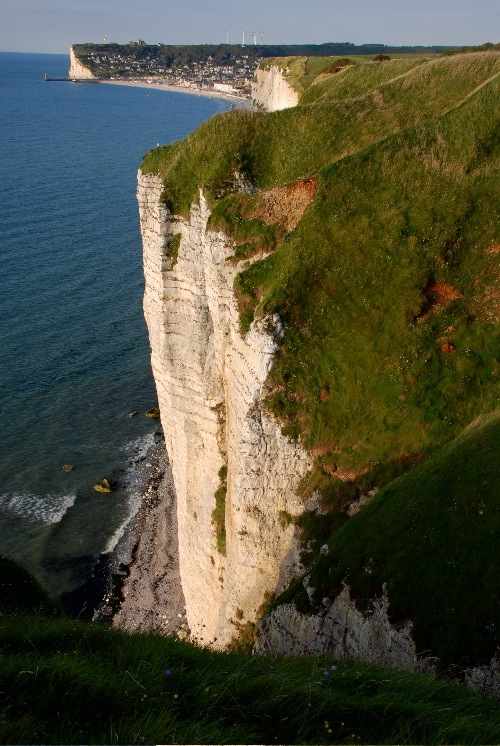
Arnold's "To Marguerite, Continued," and its less than subtle prequel (note the last lines). Arnold's Dover Beach.
Looking at Dover: the famous cliffs; the tumultuous sea and shore.

Elizabeth Barrett Browning's Sonnets from the Portuguese, in electronic full text (requires Harvard login).
One of the versions of Fitzgerald's Rubaiyyat in a complete (if unattractive) online text from Cornell.
A fun, multilingual, and informative, though very much nonacademic, Omar Khayyam fan site, with comparisons between the Persian (in Persian script) of Omar, literal translations into English and other European languages, and FitzGerald's adaptations.
Sunday, March 1, 2009
keats and austen
From Toronto: all the Keats poems; the sonnet on the Elgin Marbles; the Urn; the sonnet on the four seasons; the ode called "To Autumn."
The British Museum's public information on the Elgin Marbles and the broader set of pieces from the Parthenon.
A few of those pieces: a sacrificial procession (with cow); horsemen.
Two sonnets by John Milton important to Keats' thinking about the sonnet as a form and about his own poetic career.
A meaning Keats could not have intended in "To Autumn," and yet an analogy for one of his lyric goals.
The only certainly authenticated sketch of Jane Austen, by Cassandra Austen (1810). Austen's writing desk.
A nonacademic but comprehensive e-resource center for the study of Austen, including a quick biography.
The Cobb at Lyme, in a modern photograph. The stairs from which Louisa jumps.
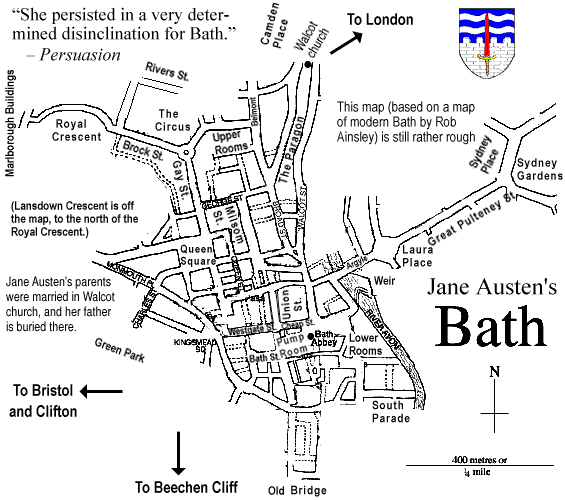
An oddly placemat-like annotated map of Jane Austen's Bath. A proper map of Bath in her time (sans annotations).
The Jane Austen Society of North America, a helpful but nonacademic resource, and the Jane Austen Society of the UK, likewise.
The British Museum's public information on the Elgin Marbles and the broader set of pieces from the Parthenon.
A few of those pieces: a sacrificial procession (with cow); horsemen.


Two sonnets by John Milton important to Keats' thinking about the sonnet as a form and about his own poetic career.
A meaning Keats could not have intended in "To Autumn," and yet an analogy for one of his lyric goals.
The only certainly authenticated sketch of Jane Austen, by Cassandra Austen (1810). Austen's writing desk.


A nonacademic but comprehensive e-resource center for the study of Austen, including a quick biography.
The Cobb at Lyme, in a modern photograph. The stairs from which Louisa jumps.


An oddly placemat-like annotated map of Jane Austen's Bath. A proper map of Bath in her time (sans annotations).

The Jane Austen Society of North America, a helpful but nonacademic resource, and the Jane Austen Society of the UK, likewise.
Subscribe to:
Posts (Atom)